Transhumanism, Consciousness & Rudolf Steiner
The Mind Vs. The Brain...

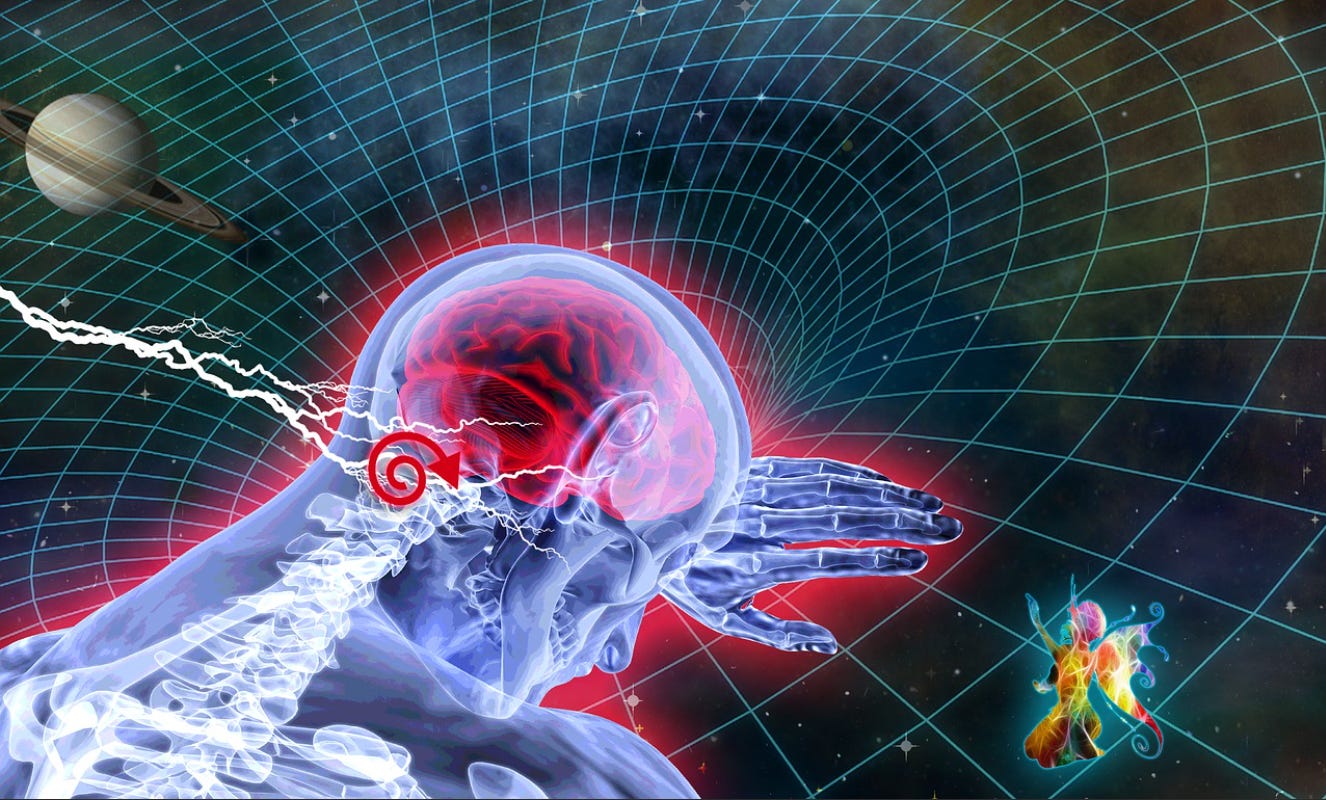
Strategic
Coordination of
Analytically-based
Long-Term
Angular thought &
Redirection
S.C.A.L.A.R
“Because of their very nature, science and logical thinking can never decide what is possible or impossible. Their only function is to explain what has been ascertained by experience and observation…
Everyday something must be achieved inwardly.” - Rudolf Steiner
To the extent in which one can ascertain the voracity of what we call and implicitly know as the term and understanding of “trust”, there won’t be any forward-movement with regards to the development of an individual in certain avenues of one’s life experience.
Why do I state the above with such postulations of “confidence”? Isn’t the entire concept of “life” with regards to progressively-oriented educational pursuit to “question everything”? I would adamantly agree - but to what point does one, within a particular category of one’s life-experience (relationships, business deals, heck, even playing Call of Duty or Fortnite with a friend online) begin to simultaneously question the understanding of the granularities of said undertaking of trusting another person or process, whilst holding true to the trust one inwardly retains in order to not transition into a state of what many would refer to as “paranoid”, “crazy” etc? (One can argue the ontological and philosophical definitions of such above-mentioned as a subject of debate in and of itself, but that is beyond the scope and focus of this particular article).
I do not claim to hold the answer to such questions above, as they preceded - and will more than likely succeed - my, and your lifetime in this physical/material reality. However, if we do not begin the process of creating such inquiries at some point, then the pursuit of anything remains to be non-existent to begin with - we can liken such to that of binary, “as above, so below” or even “something from nothing”.
In other words, we have to start somewhere.
Let us take a look at what Transhumanism is defined as to some extent, as per the National Library Of Medicine:
“‘Transhumanism’ is a blanket term given to the school of thought that refuses to accept traditional human limitations such as death, disease and other biological frailties. Transhumans are typically interested in a variety of futurist topics, including space migration, mind uploading and cryonic suspension.” - Transhumanism, medical technology and slippery slopes by: M J McNamee and S D Edwards
Now, how should we interpret the above definition? Must we also remind ourselves that those defining such are also humans in and of themselves? Hence implying that those postulating such definitions are advocating for such definitions relative to the label and framing of their personal experience; as Mr. Rudolf Steiner put so eloquently at the beginning of this article.
In other words, even the individuals creating such definitions hold no better - nor worse - of a perspective and definition than neither you, nor I.
It has become intrinsically and ever-more-so apparent that through the use and consumption of content (Netflix shows, for one) across a plethora of consumer, commercial, and even industrial markets and developments (with the term “content” not being exclusive to that of simple digital and cybernetic apparatuses relative to the general inference most interpret such as) that the overall term “Transhumanism” means something different - but also something entirely identical - to the understanding of the masses.
Allow me to elaborate.
When one thinks “Transhumanism”, some think super soldiers (the Halo video-game series would be an abstract example), some think the ability to transfer consciousness from one body to another; and others simply think of films such as The Terminator, RoboCop, or even in much more modern references, Elon Musks’s Neuralink as a means of aiding in either enhancing or “repairing” what we have known to label as “natural” human capabilities.
But have we also considered that when one heads to the hospital for a heart transplant, or heads in for an operational surgery to receive intervertebral discs - otherwise known more commonly as Spinal Disks/Implants - that such is not transhumanistic? Are we not “transforming” or “transcending” - to some degree, albeit limited within the public domain of STEM - the human body’s “natural” capabilities to re-adjust, improve, or repair such functions to allow for an individual to either head “back” to how they used to feel in order for their quality of life experience to be improved or repaired substantially? Now, let me be clear; what you have just read in this particular paragraph is perhaps a very confined and isolated definition of transhumanism - as I am not claiming that what I have just discussed above has zero side-effects, residual concerns, etc - but do you see what I’m attempting to convey here?
What is transhumanism? Should we avoid such political rhetoric in order to avoid emotionally-neuronal “activations” in which can (largely) effect our way of thinking and therefore cause us to make decisions purely on emotion, therefore limiting our consequence of decisive action to strictly that of an emotional outcome?
In other words, one can strongly argue that a purely-emotional thought (or emotional interpretation of an observed external action within the context of said perceiver’s reality) will therefore lead intrinsically and consequentially to a purely emotional reaction; and therefore an actionable reaction based upon the limited interpretations of the initial construct in which such was interpreted as from a neurological standpoint (amongst an abundance of other variables as well to be fair; but such resides beyond the scope of this particular article).
Is the above not - albeit to an arguably limited degree - defining transhumanism as well perhaps? One may ask, “Dave, how-so?”
Well, with the above two paragraphs in mind, let us take this one step further: by limiting the scope of how one cognitively interprets an external action, whether it be someone speaking, responding to being “shot at” in a game of Call of Duty, or otherwise; is one not transforming, anti-humanising or limiting (which is the polar opposite of transhumanism by its very definition of Hegel’s Dialectic and many others’) the overall scope in which said external events are interpreted?
Such questions, of which I myself do not claim to hold the answer to, seem to take the ideological path discerning between the mind and the brain. As Rene Descartes theorized, “He (Descartes) reaches this conclusion by arguing that the nature of the mind (that is, a thinking, non-extended thing) is completely different from that of the body (that is, an extended, non-thinking thing), and therefore it is possible for one to exist without the other.” - Source: https://iep.utm.edu/rene-descartes-mind-body-distinction-dualism/
This speaks to Hegel’s Dialectic of Thesis, Antithesis and Synthesis.

In my humble view, this thought-avenue now takes us to Neuroplasticity - but “how-so Dave”?
According to a paper from the National Library Of Medicine,
“Neuroplasticity, also known as neural plasticity or brain plasticity, is a process that involves adaptive structural and functional changes to the brain. A good definition is “the ability of the nervous system to change its activity in response to intrinsic or extrinsic stimuli by reorganizing its structure, functions, or connections.” Clinically, it is the process of brain changes after injury, such as a stroke or traumatic brain injury (TBI). These changes can either be beneficial (restoration of function after injury), neutral (no change), or negative (can have pathological consequences).
Neuroplasticity can be broken down into two major mechanisms:
Neuronal regeneration/collateral sprouting: This includes concepts such as synaptic plasticity and neurogenesis.
Functional reorganization: This includes concepts such as equipotentiality, vicariation, and diaschisis.
The first mention of the term plasticity in regards to the nervous system was by William James in 1890. However, the term neural plasticity is credited to Jerzy Konorski in 1948 and was popularized by Donald Hebb in 1949.” - Matt Puderbaugh, Prabhu D. Emmady, Source: https://pubmed.ncbi.nlm.nih.gov/32491743/
I (Dave) personally am enthralled by the potential correlations in which the brain has to the mind - for if the mind is perhaps, “non-local” as Quantum Physics seems to intrinsically imply - as do professors such as Sir Roger Penrose with direct respects to how he claims he cannot affirmatively state whatsoever as to what consciousness is, so much as to what he can definitively state as to what consciousness isn’t.
Does the brain perhaps contain neuroplastic “metamaterials” in which we have yet to discover (publicly if you catch my drift on this) that act as a “medium” or “go-between” to that of the mind? Or at the very least attaining one step further towards such?
So I then ask once again, what is transhumanism? It’s benefits? It’s downfalls? And how far should one “push it” relative to opting for a more natural, cosmic “remedy”?
- Dave